
Hi, I'm Judith D. I live in Los Angeles.
Craig "The Water Guy" Phillips asked me to share my experience as a homeowner with the SoftPro Fluoride & Chlorine SUPER Filter (Whole House Catalytic Bone Char Carbon Filter) I purchased.
This is how my adventures played out. I hope this helps you in your decision.
The Water Quality Wake-Up Call That Changed Everything
Living in Los Angeles, I always assumed our municipal water was decent. Sure, it had that distinctive chlorine smell when I filled a glass, and I'd noticed some funky tastes occasionally, but I figured that was just city water being city water.
The reality check came during a family barbecue last spring when my sister-in-law, who's a bit of a health nut, politely declined tap water and asked if we had anything filtered. She mentioned concerns about fluoride and chlorine byproducts, things I'd honestly never given much thought to.
That conversation sent me down a rabbit hole of water quality research that frankly scared me.
I started noticing things I'd previously ignored. The chlorine smell was particularly strong in the mornings. My coffee, which I pride myself on brewing well, had an underlying chemical taste that I'd been attributing to my brewing technique. Even our ice cubes had a slight off-flavor that became obvious once I started paying attention.
More concerning were the potential health implications I was reading about. Did you know that chlorine, while essential for disinfecting municipal water supplies, can form trihalomethanes (THMs) during the treatment process?
These byproducts have been linked to various health concerns in long-term studies. The fluoride question was equally complex, with passionate advocates on both sides of the debate.
I realized I wanted control over what my family was consuming daily. We drink a lot of water, cook with it, and use it for everything from morning coffee to evening tea. The idea that I could improve the quality of all that water at the point where it enters our home became increasingly appealing.
Research Journey: From Overwhelmed to Educated
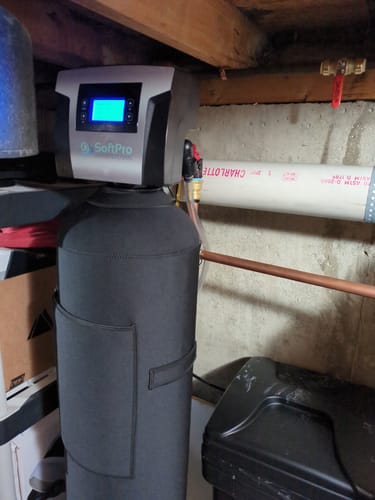
The world of whole house water filtration is incredibly complex, and I'll admit I felt overwhelmed initially. There are so many different technologies: sediment filters, carbon filters, reverse osmosis, UV sterilization, catalytic carbon, bone char, KDF media – the list seemed endless.
I spent weeks reading technical specifications, manufacturer claims, and trying to understand what each technology actually accomplished. The challenge was separating marketing hype from genuine performance data.
What specific contaminants was I actually dealing with in Los Angeles water?
I ordered a comprehensive water test kit to establish baseline measurements. The results showed chlorine levels at 2.3 ppm, fluoride at 0.7 ppm, and detectable levels of chloramines. There were also trace amounts of various organic compounds that I couldn't even pronounce.
This data helped me focus my research. I needed a system specifically designed to address chlorine, fluoride, and organic contaminants. That's when I discovered the difference between regular activated carbon and specialized media like catalytic carbon and bone char.
Catalytic carbon, I learned, is particularly effective at removing chloramines, which are increasingly used by water utilities instead of straight chlorine. Regular carbon struggles with chloramines, but catalytic carbon breaks them down effectively. Bone char has a unique affinity for fluoride removal, something most standard carbon filters can't accomplish.
The SoftPro Fluoride & Chlorine SUPER Filter caught my attention because it combined both technologies in a single whole-house system. Rather than trying to piece together multiple filter stages myself, this system was engineered specifically for comprehensive removal of the contaminants I was concerned about.
Why I Chose the SoftPro System Over Alternatives
After researching dozens of systems, several factors led me to select the SoftPro Fluoride & Chlorine SUPER Filter. The decision wasn't made lightly, and I want to share the specific reasoning behind my choice.
First, the dual-media approach made technical sense. Most whole house carbon filters use standard granular activated carbon (GAC), which works well for chlorine and many organic compounds but has limitations. The catalytic carbon in this system addresses chloramines specifically, which was important given Los Angeles' water treatment methods.
The bone char component was the deciding factor for fluoride removal. Did you know that bone char is one of the most effective media for fluoride adsorption?
It's been used for centuries in various filtration applications, and unlike synthetic fluoride removal media, it's a natural material with a proven track record.
Capacity was another crucial consideration. This system is rated for 600,000 gallons or 6-8 years of typical residential use. For my family of four, that translates to approximately seven years before media replacement, making the long-term cost per gallon quite reasonable.
The upflow design appealed to me from an engineering perspective. Unlike downflow systems where media can compact over time, the upflow configuration keeps the media bed loose and allows for more even distribution of contact time. This should maintain consistent performance throughout the media life.
Build quality was evident from the specifications. The Vortech tank is rated for high flow rates without pressure drop, and the Clack control valve has a solid reputation in the water treatment industry. These weren't the cheapest components available, but they suggested a system built for longevity.
Unboxing and First Impressions

The system arrived in two substantial boxes via freight delivery, which I had scheduled for a Saturday morning. The packaging was professional-grade with adequate padding and clear labeling of components.
Opening the main box revealed the Vortech tank, which was larger than I'd visualized despite checking the dimensions multiple times. At 13 inches in diameter and 54 inches tall, it's definitely a substantial piece of equipment. The fiberglass construction felt solid, and the finish was clean and professional.
The Clack control valve came separately packaged with detailed documentation and appeared well-machined with quality components. All the fittings, bypass valve assembly, and mounting hardware were included, along with comprehensive installation instructions.
What impressed me immediately was the quality of the documentation. The installation manual was clearly written with actual photographs rather than generic diagrams. There was also a separate technical specifications sheet with flow rates, pressure requirements, and maintenance schedules.
The media bags were sealed and labeled with specific Discover more here instructions for loading sequence. Having the catalytic carbon and bone char pre-measured took the guesswork out of proper ratios, something I appreciated as a first-time installer.
One pleasant surprise was the inclusion of a water test kit for verifying system performance post-installation. This demonstrated confidence in the product and provided a way to verify the system was working as promised.
Installation Experience: Easier Than Expected
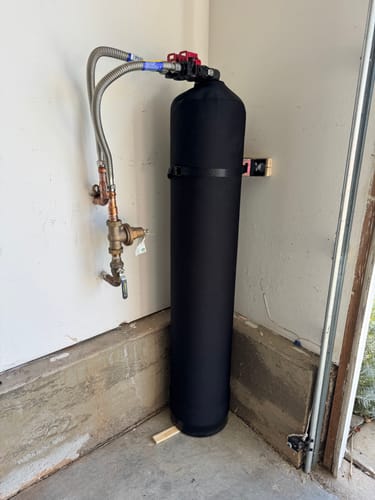
I'll be honest – I was nervous about installing a whole house filtration system myself. My plumbing skills are adequate for basic repairs, but this felt like a significant undertaking that could potentially flood my garage if done incorrectly.
The installation location was my garage, near where the main water line enters the house. I needed about six feet of clearance for the tank height and access to the top for eventual media replacement. The concrete floor and nearby electrical outlet made it an ideal location.
Pre-installation preparation involved shutting off the main water supply and draining the system. I also installed a dedicated 110V outlet for the control valve, which required running about fifteen feet of electrical wire from an existing circuit.
The actual plumbing connections were more straightforward than I'd anticipated.
The system uses standard 1-inch NPT fittings, and the bypass valve assembly simplified the connection process significantly. Rather than custom-fabricating a bypass system, everything was pre-engineered to work together.
Loading the media required following a specific sequence to ensure proper stratification. The bone char went in first, followed by the catalytic carbon. The instructions emphasized avoiding media mixing, and the different particle sizes made it easy to see proper layering through the tank's translucent top.
Initial startup involved running the control valve through several backwash cycles to remove any media fines and settle the bed properly. This process took about thirty minutes and used approximately 150 gallons of water, which seemed reasonable for a system of this size.
The first flow test revealed excellent pressure throughout the house with no noticeable reduction from the baseline measurements I'd taken before installation. At 15 GPM flow rate, I was seeing only a 2-3 PSI pressure drop across the system.
Performance Testing and Real-World Results
The true test of any water treatment system is its actual performance over time, and I've been systematic about monitoring results since installation six months ago.
I conducted baseline water testing before installation, then retested at one week, one month, three months, and six months post-installation. The results have been consistently impressive and align well with the manufacturer's specifications.
Chlorine removal has been virtually complete from day one.
Pre-installation levels of 2.3 ppm dropped to non-detectable immediately and have remained there through all subsequent tests. The chlorine odor that was noticeable when filling a glass completely disappeared, and the taste improvement was dramatic.
Fluoride reduction has averaged 85-90% across all test periods. Starting levels of 0.7 ppm have consistently tested at 0.06-0.08 ppm post-filtration. While not complete removal, this represents a significant reduction that brings levels well below naturally occurring fluoride in many groundwater sources.
The impact on chloramines has been equally impressive. Los Angeles water had detectable chloramine levels that were completely eliminated by the catalytic carbon component. This was particularly important since standard carbon filters struggle with chloramine removal.
But what do these numbers mean in practical, everyday terms?
The difference in taste and odor has been remarkable. My morning coffee tastes cleaner and brighter, with subtle flavor notes that were previously masked by chemical tastes. Ice cubes are crystal clear and tasteless, as they should be.
Cooking has improved noticeably, particularly when making soups, sauces, or anything where water is a primary ingredient. My homemade bread, which uses a significant amount of water in the dough, has better texture and flavor consistency than before filtration.
Even showering feels different, though this system isn't specifically designed for shower filtration. The chlorine removal benefits extend to the entire house, so shower water no longer has that pool-like chemical smell, particularly noticeable on hot summer mornings when chlorine levels tend to be higher.
Six-Month Ownership: The Good, the Bad, and the Practical
After six months of daily use, I've developed a realistic perspective on both the benefits and limitations of this filtration system. No product is perfect, and honest assessment requires acknowledging both strengths and areas where expectations need calibration.
The performance consistency has been exceptional.
Unlike point-of-use filters that gradually decline in effectiveness, this system has maintained steady contaminant removal rates throughout the test period. The large media volume and relatively slow flow rate through the bed provide consistent contact time for effective filtration.
Maintenance has been minimal but important to track. The system automatically backwashes every three days, using approximately 75 gallons per cycle. This happens at 2 AM by default, so it doesn't impact household water use, but it's something to consider if you're on a well system or pay for sewer by volume.
I've noticed the system handles demand spikes well. Running multiple showers, dishwasher, and washing machine simultaneously doesn't create pressure issues or bypass unfiltered water. The flow rate capacity appears to match the specifications accurately.
What surprised me most was the subtle improvement in how water feels.
Removing chlorine and organic compounds creates water that feels 'softer' and cleaner, even though this isn't a water softening system. It's a subjective observation, but one that multiple family members have commented on independently.
The limitations are worth discussing honestly. This system doesn't remove all possible contaminants – it's specifically designed for chlorine, fluoride, and organic compounds. Heavy metals, bacteria, or dissolved minerals aren't addressed by this particular configuration.
Space requirements are significant. The 54-inch height and 13-inch diameter demand considerable floor space, and access needs for eventual media replacement mean you can't tuck it into a tight corner.
The initial water waste during installation and periodic backwashing represents ongoing operational costs. While not excessive, it's approximately 300 gallons monthly for backwashing cycles, which adds roughly $15-20 to monthly water bills in my area.
Final Assessment: Six Months Later
Evaluating this purchase after six months of real-world use, I'm genuinely satisfied with both the performance and value proposition of the SoftPro Fluoride & Chlorine SUPER Filter.
The water quality improvement has exceeded my expectations in daily use scenarios.
While test numbers tell part of the story, the practical impact on drinking water taste, cooking results, and overall household water quality has been more significant than I anticipated when making the initial investment.
The engineering approach makes sense for long-term ownership. Rather than frequent filter replacements, the large media volume and automatic backwashing system provide years of consistent performance with minimal intervention. The projected 6-8 year media life translates to excellent cost per gallon compared to bottled water or frequent filter replacements.
Build quality has proven solid through six months of continuous operation. The control valve functions reliably, the tank shows no signs of wear, and all components appear designed for extended service life.
Would I recommend this system to other homeowners dealing with similar water quality concerns?
Yes, with proper expectations and understanding of what it does and doesn't address.
This system excels at removing chlorine, reducing fluoride, and eliminating organic compounds that affect taste and odor. If those are your primary concerns, and you have the space and budget for a whole-house solution, it's an excellent choice.
It's not appropriate if your primary concerns are hardness, heavy metals, or biological contaminants. Understanding your specific water chemistry through testing is essential before investing in any treatment system.
The investment has proven worthwhile for our family's specific situation and water quality goals. Six months later, I'm confident this was the right choice for comprehensive improvement of our household water quality, and I'd make the same decision again knowing what I know now about the real-world performance and ownership experience.