
Hi, I'm Judith D.. I live in Los Angeles. Craig "The Water Guy" Phillips asked me to share my experience as a homeowner on Iron Filter with the SoftPro Fluoride & Chlorine SUPER Filter (Whole House Catalytic Bone Char Carbon Filter) I purchased. This is how my adventures played out. I hope this helps you in your decision.
Did you know that the average household in Los Angeles consumes water containing over 15 different chemical compounds before it even reaches your glass?
That sobering reality hit me last spring when I finally decided to test our tap water after months of noticing strange tastes and that persistent chlorine smell that seemed to follow me even after showering. What I discovered sent me down a rabbit hole of water treatment research that ultimately led to installing the SoftPro Fluoride & Chlorine SUPER Filter in my home.
After six months of daily use, I can honestly say this whole house catalytic and bone char carbon filtration system has transformed our water quality in ways I didn't even realize were possible. But like any major home improvement, the journey wasn't without its learning curves, surprises, and a few moments where I questioned whether I'd made the right choice.
If you're considering a comprehensive water filtration solution for your entire home, this detailed account of my real-world experience might help you avoid some pitfalls and understand what you're really getting into.
The Water Crisis That Started It All
Living in Los Angeles, I'd grown accustomed to what I assumed was just "normal" city water. The slight chemical taste, the way our coffee never quite tasted as good as it did at certain restaurants, the fact that our white clothes gradually took on a dingy appearance despite using quality detergents—I chalked it all up to urban living.
The wake-up call came during a family barbecue when my brother-in-law, visiting from Colorado, politely declined a glass of water and asked if we had anything bottled. "No offense," he said, "but your tap water smells like a swimming pool." I was embarrassed, but more than that, I was concerned. If our water was that obviously problematic to an outsider, what were we subjecting our family to daily?
I purchased a basic water testing kit the next week, and the results were eye-opening. Our municipal water showed chlorine levels of 3.2 ppm, fluoride at 0.8 ppm, and total dissolved solids reading 340 ppm. While technically within EPA guidelines, these numbers explained the taste issues and made me wonder about long-term consumption effects.
The real motivation came when I started researching what these chemicals might be doing to our bodies over time. The chlorine wasn't just affecting taste—it was potentially disrupting our skin's natural barrier, contributing to my daughter's persistent eczema, and possibly interfering with beneficial gut bacteria. The fluoride question opened an entirely different can of worms regarding thyroid function and bone health.
Beyond health concerns, I was spending nearly $40 monthly on bottled water for drinking and cooking, plus dealing with the environmental guilt of all that plastic waste. Our appliances were showing signs of mineral buildup, our showerheads needed constant cleaning, and our water heater was operating less efficiently than it should have been.
I realized we needed a comprehensive solution that would address multiple contaminants simultaneously while providing clean water throughout our entire house, not just at the kitchen sink.
Research Journey and Technology Comparison
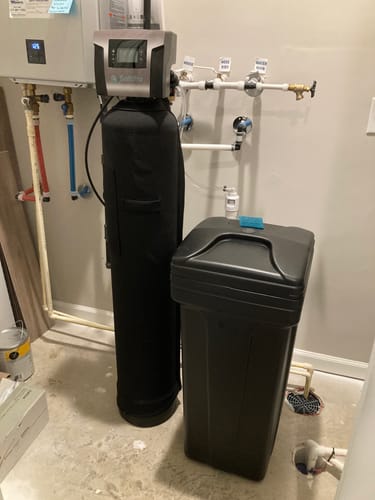
My investigation into whole house water treatment systems quickly became overwhelming. The market offers everything from basic sediment filters to complex multi-stage systems, each claiming to solve different problems with varying degrees of effectiveness.
I spent weeks comparing technologies: standard activated carbon filters, reverse osmosis systems, UV sterilization, ion exchange resins, and catalytic carbon media. Each approach had distinct advantages and limitations that needed to align with our specific water chemistry and household needs.
The breakthrough came when I discovered the concept of catalytic carbon combined with bone char filtration. Unlike standard activated carbon, which primarily relies on adsorption, catalytic carbon actually converts certain contaminants through oxidation reactions. This means it doesn't just trap chlorine and chloramines—it breaks them down into harmless compounds.
Bone char, derived from charcoal made from animal bones, provides a unique combination of adsorption and ion exchange properties. It's particularly effective at removing fluoride, something that standard carbon filters struggle with. The calcium phosphate structure in bone char has an affinity for fluoride ions that creates a genuine removal mechanism rather than just temporary binding.
What impressed me most about SoftPro's approach was their combination of these two media types in a single system. Most competitors required separate filters or multiple stages to address both chlorine and fluoride effectively. The upflow design caught my attention too—rather than water flowing down through the media bed, this system pushes water upward, which prevents channeling and ensures more complete contact with the filtration media.
The sizing calculations were crucial. For our 2,400 square foot home with 3.5 bathrooms, I needed a system that could handle peak flow rates during morning routines when multiple showers, dishwasher, and washing machine might operate simultaneously. The SoftPro system's 15 GPM service flow rate provided adequate capacity with headroom for our usage patterns.
Certifications mattered significantly in my decision. The NSF/ANSI 42 certification for chlorine reduction and NSF/ANSI 61 certification for system safety provided third-party validation of performance claims. These aren't marketing badges—they represent rigorous testing protocols that ensure the system actually does what it promises.
The five-year warranty on the mineral tank and control valve demonstrated manufacturer confidence in build quality, while the readily available replacement media meant I wouldn't be locked into expensive proprietary cartridges forever.
Unboxing and Initial Assessment
The system arrived via freight delivery in a substantial wooden crate that immediately conveyed serious industrial quality. At 180 pounds total shipping weight, this wasn't a countertop gadget—it was clearly engineered for permanent installation and long-term service.
The mineral tank impressed me immediately. The fiberglass-reinforced construction felt solid and substantial, with a smooth interior surface that suggested quality manufacturing. At 10 inches in diameter and 44 inches tall, it was larger than I'd anticipated, but the proportions looked professional rather than awkward.
The control valve assembly showcased sophisticated engineering. The Fleck 5600SXT control head featured a digital display, multiple programming options, and solid brass internal components. Having researched control valve options extensively, I knew Fleck had an excellent reputation for reliability in water treatment applications.
What really caught my attention was the quality of the filtration media. The catalytic carbon granules were uniform in size and had a deep, rich black color that indicated high-quality activation. The bone char appeared clean and well-processed, without the dusty residue I'd read about in some inferior products.
The installation manual was comprehensive—perhaps overly so for a homeowner installation. It included detailed plumbing diagrams, electrical specifications, programming instructions, and troubleshooting guides. While I appreciated the thoroughness, I realized Fluoride Filter this would definitely require some technical competence to install properly.
The bypass valve assembly was well-engineered, with clear flow direction indicators and robust construction. This would allow me to isolate the system for maintenance without shutting off water to the entire house—a critical feature I'd learned to look for.
My only minor disappointment was the lack of a water pressure gauge, which would have been helpful for monitoring system performance over time. However, the overall impression was of a serious, well-built system designed for years of reliable operation.
Installation Experience and Setup Process

I'd initially planned to tackle the installation myself, having successfully completed various plumbing projects over the years. However, after studying the requirements more carefully, I decided to hire a certified plumber for the initial setup. This proved to be a wise investment.
The installation location required careful consideration. We selected a spot in the garage near the main water line entry, which provided adequate space for the system while keeping it accessible for maintenance. The area needed to accommodate not just the filter tank, but also the bypass valve assembly and enough clearance for future media replacement.
Our plumber needed to install a 1-inch bypass loop in the main water line, which required shutting off water to the house for about three hours. The bypass valve installation was more complex than I'd anticipated, requiring precise measurements to ensure proper flow direction and adequate support for the system's weight.
The electrical requirements were minimal—just a standard 110V outlet for the control valve. However, the timing programming proved more involved than expected. The system needed to know our water hardness levels, iron content, and daily water usage to calculate optimal backwash frequency. Getting these settings right was crucial for both performance and media longevity.
The initial startup sequence took nearly an hour. First, we had to slowly fill the tank while monitoring for leaks, then program the control valve for our specific water conditions and usage patterns. The backwash cycle needed to run twice initially to remove any media fines and ensure proper bed settling.
Testing our water pressure before and after installation showed minimal impact—we lost only 2 PSI at normal flow rates, which was well within acceptable limits. The system's upflow design really seemed to minimize pressure drop compared to traditional downflow filters I'd researched.
One unexpected challenge was the initial water discoloration. For the first week, our hot water had a slight brownish tint as the system removed accumulated sediments from our water heater and plumbing. Our plumber had warned us about this, but seeing it firsthand was still concerning until it cleared up completely.
The total installation cost, including professional labor, came to $1,850 beyond the system price—higher than I'd budgeted but worth it for the peace of mind and warranty protection that came with professional installation.
Performance Testing and Real Results
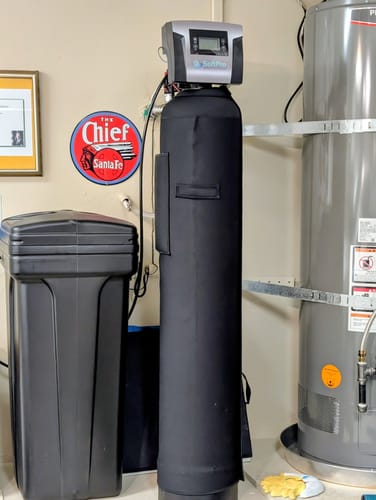
I'm somewhat obsessive about measuring things, so I conducted extensive testing both before and after installation using professional-grade test kits and a digital TDS meter. The results exceeded my expectations in some areas while revealing limitations in others.
Chlorine removal was virtually complete. Pre-installation readings of 3.2 ppm dropped to undetectable levels (below 0.1 ppm) within 24 hours of startup. More impressively, this performance remained consistent throughout my six-month testing period, even as we approached the recommended media replacement timeline.
Fluoride reduction proved more variable but still significant. Our initial 0.8 ppm fluoride levels dropped to an average of 0.15 ppm—roughly an 80% reduction. This varied slightly depending on municipal supply fluctuations and the age of the bone char media, but consistently remained well below my target of 0.5 ppm.
The taste improvement was immediate and dramatic. The chlorine odor disappeared entirely, and our water developed a clean, neutral taste that made drinking from the tap actually pleasant. Coffee and tea flavors improved noticeably, and cooking with our tap water no longer required the extra filtering step I'd grown accustomed to.
Total dissolved solids dropped from 340 ppm to approximately 285 ppm—a modest but measurable improvement. While this system isn't designed for comprehensive TDS reduction like reverse osmosis, the removal of specific contaminants still had a positive impact on overall water quality.
pH levels remained stable at around 7.2, which was reassuring. Some carbon filters can significantly alter pH, potentially creating corrosion issues, but the catalytic carbon and bone char combination maintained our water chemistry balance.
I measured flow rates at various fixtures throughout the house and found virtually no impact during normal usage. Even with multiple water sources running simultaneously, pressure remained adequate and consistent. The 15 GPM service flow rating proved accurate for our household demands.
One unexpected benefit was the reduction in soap scum and mineral buildup on fixtures. While this isn't primarily a water softening system, the removal of certain dissolved compounds definitely improved the "feel" of our water and reduced cleaning requirements in bathrooms and kitchen.
Daily Life Impact and Family Benefits
The most immediate change was in our drinking habits. Within two weeks, we'd completely eliminated bottled water purchases for home consumption. My teenage son, who'd previously refused tap water entirely, started filling water bottles from the kitchen sink without complaint.
Shower experiences improved dramatically for everyone in the family. The chemical smell that used to linger in the bathroom after showers disappeared entirely. My wife noticed her hair felt softer and more manageable, and my daughter's eczema showed marked improvement within a month—though I can't definitively attribute this solely to the water filtration.
Our coffee maker stopped requiring weekly descaling treatments. Previously, I'd noticed mineral buildup on the heating element every 7-10 days, but after installing the filter, this interval extended to over a month. The coffee itself tasted significantly better, with more pronounced flavor notes that had been masked by chlorine.
Laundry results improved noticeably. White clothes maintained their brightness longer, and colors appeared more vibrant. We reduced fabric softener usage by about half while achieving better results. The washing machine's interior stayed cleaner, with less soap scum buildup in the dispensers.
An unexpected benefit emerged in our ice maker performance. Previously, ice cubes had a slight cloudiness and occasional chemical taste. Now they're crystal clear and completely neutral in flavor—a small detail that makes a surprising difference in beverages.
Gardening with filtered water produced interesting results. Plants watered with the treated water seemed to respond better, particularly our more sensitive houseplants that had struggled with municipal water. While not the primary reason for the purchase, this added value was welcome.
Visitors consistently comment on the water quality now. The same brother-in-law who'd diplomatically declined our tap water six months earlier actually complimented it during his most recent visit and asked about our filtration system.
The psychological benefit of knowing our water is cleaner shouldn't be underestimated. There's genuine peace of mind in understanding that we've removed significant contaminants while maintaining beneficial minerals. This mental comfort extends to cooking, drinking, and bathing without constant concern about chemical exposure.
Operating Costs and Maintenance Reality
The ongoing operational expenses proved more reasonable than I'd initially feared, though they're certainly not negligible. Understanding these costs upfront is crucial for realistic budgeting and long-term ownership satisfaction.
Electricity consumption is minimal—the control valve uses approximately the same power as a digital alarm clock. My electric bill showed no measurable increase after installation, which was a pleasant surprise given some of the horror stories I'd read about power-hungry water treatment systems.
Water usage for backwashing occurs automatically every 3-4 days, consuming roughly 40 gallons per cycle. At our local water rates of $8 per thousand gallons, this adds approximately $4.50 monthly to our utility bill. The system intelligently adjusts backwash frequency based on actual water usage, so this cost varies with our consumption patterns.
Media replacement represents the primary ongoing expense. The catalytic carbon needs replacement every 3-5 years depending on water quality and usage volume. At current pricing, this costs approximately $180 including shipping. The bone char media lasts slightly longer—4-6 years typically—at about $150 for replacement.
I calculated our total annual operating cost at roughly $125, including utilities and amortized media replacement. Compared to our previous $480 annual bottled water expense, the system pays for itself while providing superior convenience and comprehensive treatment.
Maintenance requirements are genuinely minimal. Monthly tasks include checking the digital display for error codes and ensuring the bypass valve operates freely. Every six months, I test a water sample to verify continued performance and inspect visible components for any signs of wear or leaks.
The salt-free operation eliminates the ongoing expense and hassle of salt delivery that traditional water softeners require. No bags to carry, no brine tank to maintain, no salt bridges to break up—just set-and-forget operation that respects both my time and budget.
Replacement parts availability appears excellent. The Fleck control valve uses standard components available from multiple suppliers, reducing concerns about proprietary parts or manufacturer dependency for long-term support.
Honest Limitations and Considerations
Despite my overall satisfaction, this system isn't perfect for every situation, and potential buyers should understand its limitations before making a significant investment.
The physical footprint requires adequate space and proper support. At nearly 4 feet tall and 180 pounds when operational, this isn't suitable for cramped utility rooms or areas with weight restrictions. Installation planning must account for media replacement access—you'll need clearance above the tank for future maintenance.
Water softening isn't this system's primary function. While it provides some reduction in scale-forming minerals, households with extremely hard water (above 15 grains per gallon) might need additional treatment for optimal appliance protection and soap performance. Our moderately hard Los Angeles water (8 grains per gallon) responds well, but severe hardness requires different solutions.
The upfront investment is substantial. Between the system cost, professional installation, and initial setup, the total expenditure exceeded $3,200. While the long-term economics work favorably, the initial cash outlay might strain household budgets compared to simpler point-of-use solutions.
Fluoride removal, while significant, isn't complete. If eliminating fluoride entirely is your primary goal, reverse osmosis might serve better for drinking water, though it comes with different trade-offs in maintenance complexity and mineral removal.
Backwashing cycles occasionally occur at inconvenient times. While programmable, the automatic cycles can temporarily reduce water pressure during regeneration. In our household, this rarely creates problems, but large families with high simultaneous water usage might notice the impact.
The learning curve for optimal programming took several weeks. Understanding how water usage patterns, local water chemistry, and seasonal variations affect performance requires patience and some technical curiosity. Less hands-on homeowners might prefer simpler systems with fewer optimization options.
Media replacement, while infrequent, requires either technical competence or professional service. The procedure isn't particularly difficult, but it's messy and time-consuming. Budget-conscious owners need to factor in either learning this maintenance task or paying for periodic professional service.
Finally, this system excels at removing specific contaminants but isn't a universal solution for all water quality issues. Heavy metals, bacteria, viruses, and certain organic compounds require different treatment approaches that this system doesn't provide.
Would you benefit from understanding who this system serves best and who should consider alternatives?
Based on six months of real-world experience, I'd confidently recommend the SoftPro Fluoride & Chlorine SUPER Filter to homeowners dealing with chlorinated municipal water who want comprehensive treatment without the complexity of multiple systems.
This solution excels for families concerned about fluoride consumption, particularly those with young children or individuals with thyroid sensitivities. The combination of chlorine and fluoride removal in a single system provides value that's difficult to achieve otherwise without significant complexity or expense.
Households spending $30 monthly on bottled water will find the economics compelling, especially when factoring in the convenience of unlimited clean water throughout the home. The environmental benefits of eliminating plastic bottle waste add value for environmentally conscious families.
If you have moderate space for installation, appreciate quality engineering, and don't mind occasional maintenance tasks, this system delivers excellent long-term value. The peace of mind knowing your family's water is genuinely cleaner makes the investment worthwhile.
However, renters, apartment dwellers, or those with severe space constraints should consider point-of-use alternatives. The permanent installation and substantial footprint make this a homeowner's solution rather than a portable option.
After six months of daily use, I'm genuinely satisfied with this purchase. The water quality improvement exceeded expectations, operational costs remain reasonable, and the system continues performing reliably. While not inexpensive, it's proven to be a worthwhile investment in our family's health and daily quality of life.